
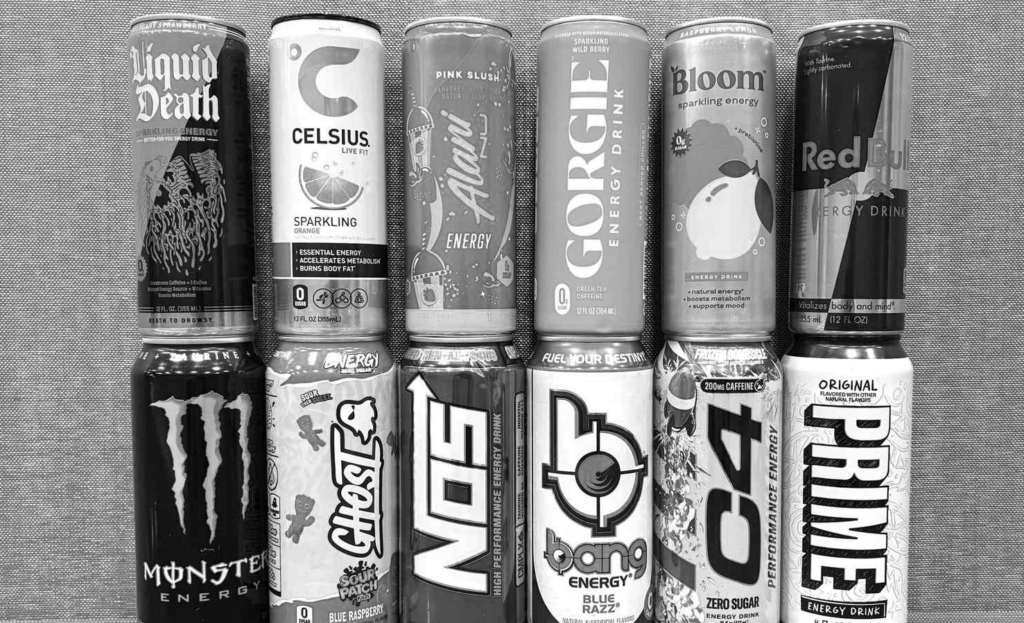
Walk into any high school in America right now, and you’ll see the same view of kids clutching their color coded and aggressively branded cans like their life depends on them. Among the old and dependent Starbucks refreshers, Dunkin’ cold brews, and whatever mom packed, there is now a new contender for the most important morning beverage. The energy drink. And it has, somehow, completely taken over. To be fair, its takeover is not that shocking. We are a generation that runs on four hours of sleep, endless school work, lots of procrastination and distraction, and a deep personal relationship with caffeine. Energy drinks are everywhere now, in backpacks, bought at lunch, brought out of backpacks. According to a poll, 64% of Gen Z aged 18-24 drink at least one energy drink per day, and it’s safe to assume a meaningful chunk of the under-18 audience is at a high number as well (Civic Science). So, let’s break the clash about energy drinks, specifically, the 6 most popular ones. First, Red Bull. The OG. The one that people drank in the early 2000s and still drink today. They have a distinct taste that’s similar to bubblegum but altogether hard to describe yet super distinct. Kind of sweet, kind of tart, and also medicinal. The beauty of Red Bull is that it offers sugared and sugarfree versions, and both actually taste good. The flavors like Iced Vanilla Berry, Coconut Berry, White Peach, or many of the seasonal editions, are consistently outstanding. Red Bull does not try to be everything, but does its job and is great at it. Next, Monster. It is a big dog because of its volume. The 16 oz cans have the branding of being edgy and for skaters or any hardcore enthusiasts. They contain about 160mg of caffeine and taurine and ginseng for an energy surge. It has branched out to over 300 different flavors, but some of them are a bit questionable. The taste is really bold and feels almost electric. It is a classic energy drink, and one you grab when you feel like you need a big kick. Now, CELSIUS. It recently exploded in popularity and has never left. A 12oz can contains 200mg of caffeine with 0 grams of sugar by using green tea extract, guarana, and ginger root. It became the head of the fitness influencer crowd, and has sleek and clean branding. It sounds good in theory, but it has a lot of caffeine and tastes pretty artificial. It has shown much of the population that drinking energy drinks can be similar to eating a salad. Alani Nu is CELSIUS’s flashier cousin.
It is more instagram ready and even partnered with big celebrities like Kim Kardashian in “Kimade.” This targets their audience of young women and it is almost impossible to go anywhere without seeing these cans. It, similar to CELSIUS, has 200mg of caffeine in a 12 oz can. The packaging is cute and flashy and the marketing works, but the taste on this one is something I’ll cover soon. GHOST took a new approach that was pretty successful. Rather than invent new flavors, GHOST used candy brands everyone loves and collaborated with Warheads and Sour Patch Kids to create energy drinks that taste like childhood. GHOST contains 200mg of caffeine as well as many other ingredients. The key strategy was this collaboration, and attracted a large acquisition by Keurig Dr Pepper in 2024. Unfortunately, this led to a large lawsuit that ended the Sour Patch Kids and Swedish Fish flavors. RIP. Lastly, 5-hour Energy. It’s a wildcard. It’s not really a drink, but more like a dose that you take like medicine. It is designed for long road trips or adults who need to stay awake. It tastes like someone put vitamins in a brightly packaged little bottle. Not much else to say. Alani and CELSIUS have mastered something dangerous– the art of tasting fake in a way that people keep mistaking for good. Both of them are zero sugar, which does sound good in theory. In practice, that means a heavy reliance on artificial sweeteners to get their distinct taste profiles. Alani is so heavy on the sweeteners it tastes like a bag of candy added to a can with carbonation, tasting almost like real fruit but then ending with the distinct aftertaste of an artificial sweetener. It’s sugar-free yet cloying. Some people like it, but for others just drinking one half feels too much. CELSIUS, to me, is better than an Alani as it is more palatable but its taste is still something that could be worked on. Because of the 200mg of caffeine, there is a lot of need to try and cover up that taste, which is why the drinks are so sweet. It also makes you feel jittery and makes your heart feel a little bit weird. The 200mg caffeine experience is something very real and makes you question some of your choices of drink and your actions of neglecting sleep. Red Bull, on the other hand, has a respect for the palate. The sugared versions genuinely taste good, are enjoyable, and the flavors are amazing. They’re interesting and don’t taste chemical-y. The sugar-free versions are also actually enjoyable rather than tolerable. Monster is similar to this with a richness and depth that the new-gen zero sugar drinks have not achieved yet.
GHOST also has a great taste, with the candy collabs actually tasting like their inspirations even with all of the chemicals. Specifically, the now discontinued Sour Patch Kids Blue Raspberry made you forget you were having an energy drink and tasted like the liquid version of the candy. Impressive. It would be hard to talk about energy drinks without talking about why some of the brands dominate high school hallways and how branding often plays a very large part. Social media plays a large role with brands collabing with influencers, or athletes to build a buzz. Alani specifically has many partnerships and has bright cans that feel aspirational. CELSIUS did the same thing by having people correlate it to the gym. GHOST fought for nostalgia. Red Bull has a premium and minimalist design. It feels like it has integrity and so does Monster, with its extreme sports and youth culture vibe. 5-Hour Energy’s branding is basically that if you are a tired adult you can drink it which works for their target audience. Now, for my rankings. Without a doubt, Red Bull is the best. It has been around for a while and will continue to be. It has reliable flavors and actually tastes good, and the new ones are always amazing. It respects your mouth. Monster is fine but varies, sometimes tasting good, other times not. The flavors are pretty hit or miss, but nothing is actually offensive. GHOST was great in its candy collab era, but right now they’re kind of in an awkward transition phase with nothing distinct about it. CELSIUS is fine if you don’t mind the artificial sweetener taste but do not expect a fun beverage going into it. Alani gets the most credit for the least. It has branding but beyond that the taste is very mild and too sweet. 5-Hour Energy tastes bad. No one’s drinking that one for the taste. The bottom line is, energy drinks aren’t going anywhere. With annual sales over $28 billion, they account for nearly 39% of the beverage market, and that number is only going up (Glanbia). High schoolers, college students, gym-goers, and gamers, everyone has a reason to reach for a can and the industry has given seemingly infinite options to reach for. The difference between good and mediocre ones comes down to whether the company focused on people actually enjoying the experience of drinking it, not just surviving it to get the caffeine. Red Bull remembered, some of the others are still getting there. Choose wisely, and maybe get some more sleep! *I do not have any monetary interest with Red Bull or beef against any other energy drink brand*