
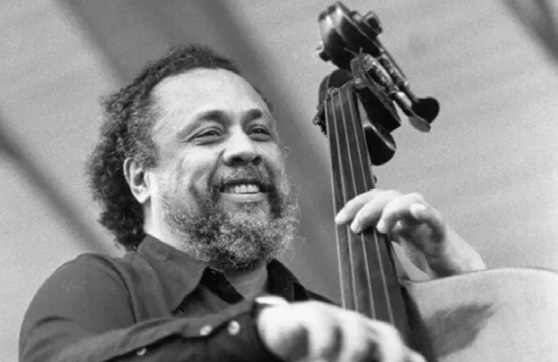
To call Charles Mingus merely a great bassist would be an understatement. He was a force of nature–a prodigious bass player, skilled piano player, bandleader, visionary composer, and an artist who shaped twentieth-century American Music. If you haven’t heard Mingus, you haven’t truly heard jazz.
In a typical jazz ensemble, the rhythm section traditionally consists of the pianist, drummer, guitarist, and bassist. For a long time, bassists were seen as the tempo keepers and harmony supporters. But everything changed with Mingus. Thanks to his unique and pioneering bass techniques, he transformed bassists into powerful and independent soloists from mere timekeepers. His mastery stretched across all genres of Jazz–from blues to bebop, New Orleans Jazz to Swing, Latin jazz to experimental Avant-Garde Jazz–constantly pushing the boundaries of what jazz could be.
Born on a military base in Nogales, Arizona in 1922 and raised in California, he was first introduced to music through the church. He studied double bass and composition in a formal way while absorbing vernacular music from the great jazz masters, first-hand. His early professional experience, in the ‘40s, found him touring with bands like Louis Armstrong, Kid Ory and Lionel Hampton.
Eventually, he made his way to New York, where he played and recorded alongside the jazz greats of the 1950s, including Charlie Parker, Miles Davis, Bud Powell, Art Tatum, and even Duke Ellington. One of the few bassists to take on a leadership role, Mingus quickly established himself as a bandleader. An accomplished pianist as well, he could have pursued a career on that instrument alone. By the mid1950s, he had taken control of his music, founding both publishing and recording companies to safeguard his expanding repertoire of original compositions. He also established the “Jazz Workshop,” a platform that allowed young composers to have their works performed and recorded.
One remarkable accomplishment of his jazz workshops was Pithecanthropus Erectus. Mingus considered this album a breakthrough, as it was his first album where he taught arrangements to his musicians by ear instead of using written notations. Through this composition, Mingus sought to portray humanity’s rise from his hominid roots (Pithecanthropus erectus) to an eventual downfall due to “his failure to realize the inevitable emancipation of those he sought to enslave and his greed in attempting to stand on a false security.”
Pithecanthropus Erectus is indeed one of Mingus’ forefront Avant-Garde Jazz compositions, including The Black Saint and the Sinner Lady, The Clown, Tijuana Moods, Mingus Dynasty, Mingus Ah Um, Cumbia and Jazz Fusion, Let My Children Hear Music. He recorded over a hundred albums and wrote over three hundred scores.
In his album Mingus Dynasty, Mingus featured one of his most overtly political compositions, “Fables of Faubus.” This piece was a direct protest against Arkansas governor Orval Faubus, who, in 1957, sent out the National Guard to block nine African American teenagers from the racial integration of Little Rock Central High School–known as the Little Rock Crisis. As shown, his compositions not only pushed musical boundaries but also served as powerful commentaries on the struggles faced by African Americans during the 1950-60s, highlighting the injustices and challenges of the era.
Charles Mingus was more than just a bassist—he was a visionary, composer, and a fierce advocate for artistic and social change. His legacy isn’t just in the notes he played. Even decades after his passing, Mingus’ influence remains undeniable. His music inspires musicians, scholars, and listeners alike, not only for its technical brilliance but for its emotional depth and unfiltered expression, making him one of the greatest artists of the twentieth century.