1770
“A sea voyage.”
Struck with an instant pang of grief, Deborah struggled to comprehend her mother’s words. After all, her father had departed on trips countless times before, and each and every time, he returned. But not this time. As she reckoned with this dreadful realization, her mother’s words faded in and out, so that she could only grasp bits and pieces of information.
“… with money tight …”
“… running out of options …”
“… indentured servitude …”
“… food and shelter for minimal work …”
“… only until you’re 18 …”
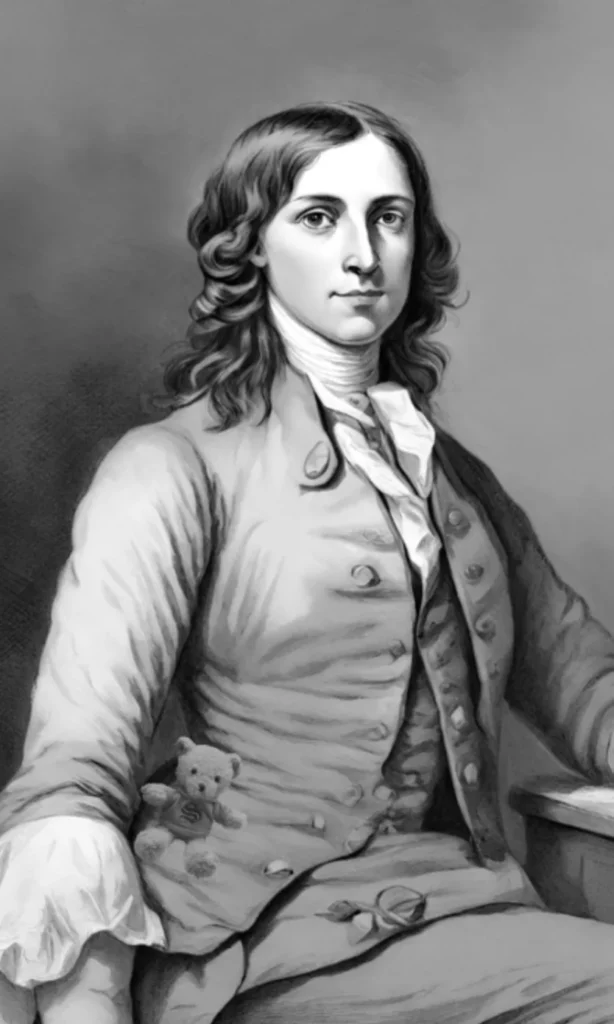
And just like that, ten-year-old Deborah wound up in the damp house of Deacon Benjamin Thomas, where she would work as an indentured servant for the next eight years (McIntire). While her basic necessities were met, she craved a secure home. Most of all, she longed for the warmth of her six siblings, the hug of her true parents.
“As I was born to be unfortunate, my sun soon clouded”
— Deborah Sampson, 1797
May 1782
After completing her servitude, Deborah made ends meet by sewing and teaching. Although the wage was small, she was provided with room and board, which allowed her to survive in tough times. Still, Deborah found herself financially desperate. As the Revolutionary War raged on, the Continental Army was handing out bounties to soldiers who enlisted. A smart woman, Deborah saw a gaping opportunity and seized it.
She hurriedly packed her belongings in a travel bag: a couple of old dresses, two pairs of shoes, one pincushion, one thimble, a pack of sewing tools, and an iron pot. For the first time in nearly a decade, Deborah would be leaving Middleborough. As she packed, a mixture of excitement and despair welled up in her. She loved the idea of departing, of starting a new life, but her need for money grew more and more frantic with every coming day.
In no time, Deborah wandered off to Bellingham, where a bearded man was enlisting soldiers for a whopping 60 pounds worth of bounty. The number was all that was needed for Deborah to confidently waltz up to the recruiter, hold out her hand, and say:
“My name’s Robert Shurtleff. I’d like to enlist.”
June 1782
Deborah had originally set out to be a cabin boy—a menial job that would afford her less attention, thereby making it easier for her to conceal her true identity. Instead, she became a spy under Captain George Webb’s Company of Light Infantry, a daring member of Massachusetts’ Fourth Regiment. By nature, her job attracted danger. Every day, she was to scout neutral Manhattan territory, gauging information on British troops and supplies to later report back to George Washington, commander of the Continental Army.
On a deceptively warm summer day, Deborah led a raid on a Tory home. Alongside two other sergeants, Deborah and her team captured fifteen Tories, supporters of the British (Michals). The adrenaline of success rushed through Deborah’s veins, sweetening the taste of victory. Suddenly, it became abundantly clear that Deborah’s motive was no longer money; it was patriotism.
July 1783
During a sweeping epidemic, Deborah caught a fatal fever, falling ill in Philadelphia while executing her soldier duties. Fearful of getting exposed, Deborah thought back to the time she got shot in her left thigh; she had chosen to extract the bullet herself, rather than risk giving herself away. Now, Deborah lay helpless on a hospital bed, drifting in and out of consciousness. And then it all went dark.
When Deborah awoke, her cover was blown. After seventeen months of service, she received an honorable discharge from the Continental Army. Disappointed, Deborah returned home. Despite it all, she had made history, forever being known as the woman who disguised herself as a man in order to fight for her country. She became the only woman to receive a complete pension as a Revolutionary War veteran, and the first woman in America to go on a year-long lecture tour. The 1837 Congress regarded Sampson with awe, claiming to have “furnished no other similar example of female heroism, fidelity and courage.”
Today
In 2020, the U.S. House of Representatives passed the Deborah Sampson Act, expanding healthcare access and benefits for women veterans through the Department of Veterans Affairs (Wounded Warrior Project). At the end of the day, Deborah Sampson’s extraordinary legacy proved that true service demands no specific form.