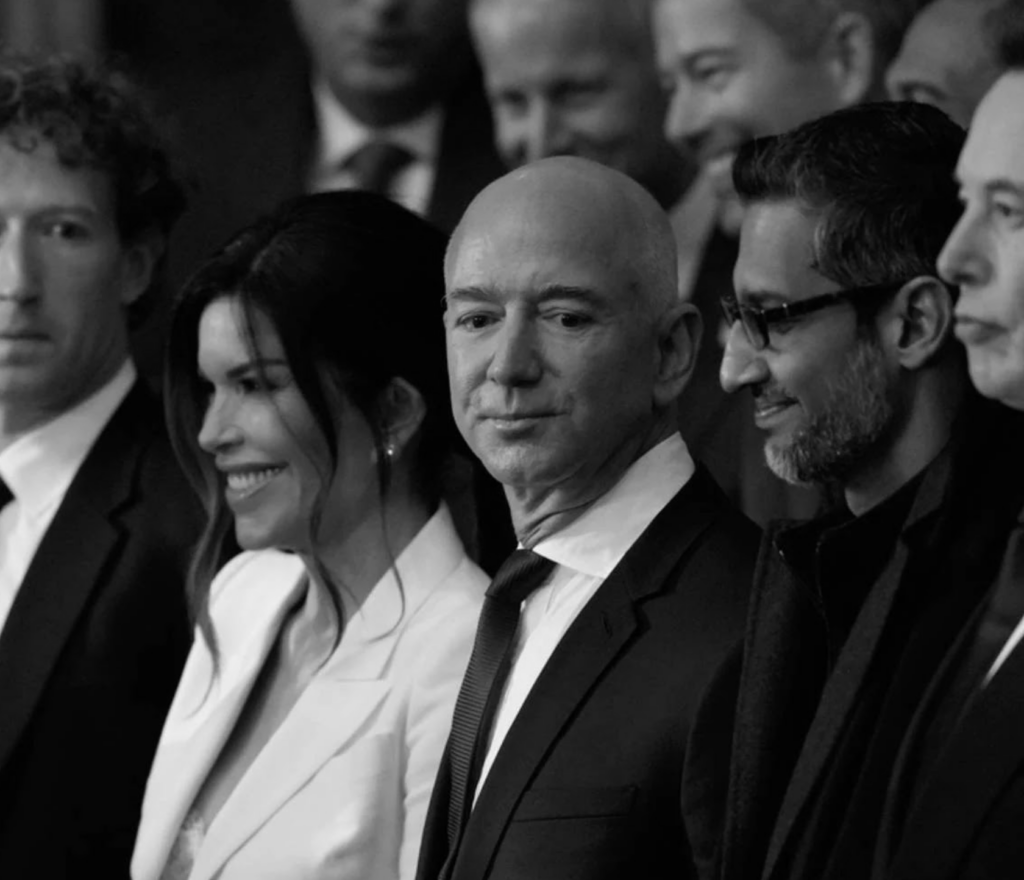
We now live in a world where one tweet shifts markets, algorithms shape our thinking, and a new form of power emerges. Billionaires like Elon Musk, Jeff Bezos, and Mark Zuckerberg wield this power, influencing public opinion and shaping political policies. As their influence grows, so do concerns about whether they should hold this level of control. The rise of these tech billionaires challenges democracy, accountability, and fairness, which form the foundation of this country. We must ask: Are they visionary leaders propelling society forward or oligarchs whose unchecked power threatens democratic values? The answer to this question could define governance’s future.
Tech billionaires actively influence policy through economic power and political involvement. Politicians cater to their interests due to their immense financial clout. Elon Musk’s influence stands out—his tweets about Dogecoin have shaken financial markets, and his sway extends to government policy, as seen in the Department of Government Efficiency (DOGE). President Donald Trump’s executive order restoring historic names aligned with Musk’s advocacy for American heritage. By controlling social media platforms and news outlets, these billionaires shape political narratives and sway public opinion. Their financial power ensures that political donations yield legislation favoring their interests, solidifying their control over decision-making. The sheer speed at which technology advances grants them an additional advantage, making it difficult for regulatory bodies to keep pace with their growing power.
Supporters argue that tech billionaires drive innovation, economic development, and job creation. Their companies generate employment, tax revenue, and industry growth while stabilizing economies. Musk’s work in electric vehicles and clean energy and Bezos’ investments in space exploration encourage governments to adopt forward-thinking policies. Philanthropists such as Bill Gates have significantly contributed to public health, funding initiatives that combat malaria, polio, and COVID-19. These efforts demonstrate how billionaires use their wealth to address societal challenges. Additionally, these billionaires serve as global influencers, introducing futuristic concepts like artificial intelligence regulation, climate-conscious business models, and space colonization, which could potentially shape the future of humanity itself.
Critics argue that tech billionaires undermine democracy by prioritizing corporate interests over public welfare. With the ability to sway a handful of key figures, they push policies that serve personal or corporate agendas at the expense of the greater good. Their concentrated power distorts democratic processes, allowing them to craft policies favoring their interests over the majority. Musk’s dominance in the cryptocurrency market exemplifies how a billionaire can manipulate financial markets for personal gain. Additionally, their immense wealth often disconnects them from everyday struggles, leading to unrealistic views on issues like income inequality, healthcare, and workers’ rights. Their influence also trivializes significant policy matters—Musk’s push to rename a U.S. government agency after Dogecoin illustrates how personal interests can overshadow governance. Bezos’ lobbying for Amazon’s tax concessions and opposition to labor reform further highlight how billionaires exploit their power to shape policies that benefit corporations while harming workers and small businesses.
Elon Musk’s impact on cryptocurrency markets exemplifies how tech billionaires influence national agendas. His tweets have always triggered massive market fluctuations, and in 2021, his influence led to a U.S. government agency adopting Dogecoin’s name. This individual control over policy underscores the disproportionate influence tech tycoons wield. Similarly, Mark Zuckerberg’s role in spreading misinformation during the 2016 U.S. election raises concerns about social media’s impact on democracy. Despite criticism, Zuckerberg’s ability to shape public discourse through his platform underscores how tech billionaires can influence politics. Bezos has also leveraged his power to push for deregulation, tax breaks, and resistance to labor reforms, preventing stricter labor laws despite Amazon’s poor working conditions. Bill Gates has used his philanthropic foundation to influence global health policies, sparking criticism that private wealth drives decision-making rather than public needs. The ability of billionaires to craft their own global agendas without oversight makes them as powerful as elected officials, yet they remain unaccountable to the people they affect.
Public opinion on tech billionaires remains divided. A 2024 Pew Research Center survey found that most Americans believe social media companies wield excessive political influence and suppress opposing views. Analysts like Senator Ron Wyden warn that Musk’s unchecked power threatens national security and democracy. Others, like Steve Bannon, label him a “techno-feudalist,” suggesting that he prioritizes corporate interests over workers’ well-being. These concerns highlight growing unease over billionaire influence on public policy and emphasize the need for stronger regulation and accountability. Some argue that billionaires should face new taxation policies or antitrust enforcement to curb monopolistic behavior, while others believe government agencies should impose stricter regulations on their industries to prevent overreach.
The reach of tech billionaires spans from global markets to national policy, sparking both admiration and alarm. While some view their innovations and philanthropy as forces for good, others fear their growing power erodes democracy and public well-being. As long as billionaires wield influence in government and business, the question remains: Can their actions be steered toward serving the greater good, or will they continue prioritizing personal and corporate interests? The answer to this question will shape the future of power, governance, and democracy itself.