
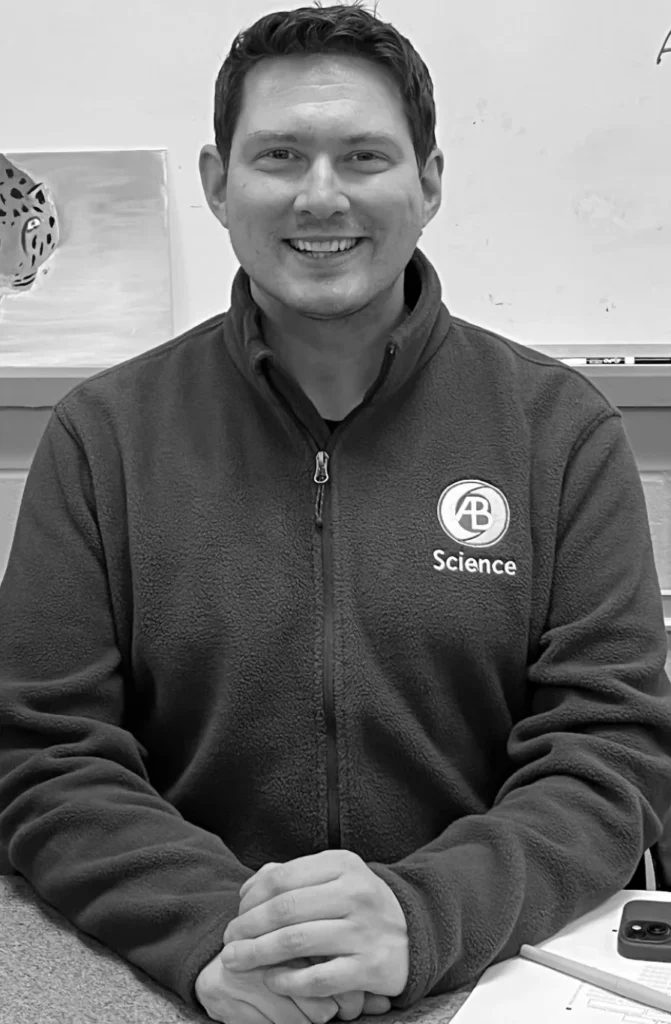
Q: What was your experience like at NASA? What is something you learned?
“In 2017 to 2018, I was what was called an Einstein Fellow. You take a break from your teaching classroom for the year, and you’re working in Washington, D.C. assigned to a federal agency or to Congress. In my case, I was assigned to NASA. My job was to be a teacher and bring new perspectives to whatever that agency I worked with. Mainly, they discussed how they could make their education programs and their media outreach better. In the current generation, Mars is a big push. Now that there are a lot of private partnerships with other agencies, a question arose: how do we work together to get to Mars? I went to a lot of meetings, which were kind of boring, but they asked me, ‘Do you think kids in America today really resonate with the Hubble Space Telescope?’ Then, they asked about the big solar eclipse that happened a few years ago. We were just starting to plan how we could make it a nationwide event and get kids excited to see the eclipse. I did have to plan some events, which included teacher events. I’d go to schools and we would talk to the astronauts in the International Space Station. I even went to Space Camp and visited the different NASA centers around the country. Overall, it was a lot of project-based stuff and meetings to just try to represent what teachers and kids would want to do today to make NASA better for everybody.”
Q: What is HSGE and how did it help you in your teaching career?
“HSGE is the Harvard Graduate School of Education. For teachers in Massachusetts, everybody has to get their masters to go to grad school. I did my undergrad at Boston University for biology and teaching, and I studied education theory and policy during my masters at Harvard. It wasn’t so much ‘how to teach,’ but more, ‘how can we reshape teaching?’ There was a lot of seeing how law interacts with education and technology, which by now has all changed, but it was mainly about how we can learn more about education more broadly, to make education better both domestically and internationally. Harvard has a ton of bright people who theorize about how we can make the world better, but in terms of education we don’t have unlimited money or classrooms of only ten students. So how can we take the theories that are out there and ground it in making things better for kids? Overall, it was just a really fun and super interesting program focusing on our country’s education.”
Q: What is your involvement with Ocean Bowl, and how does that impact your professional career?
“Ocean Bowl is a nationwide buzzer style competition for local high schools where we learn college-level marine biology and oceanography in order to compete. We practice October through February, and we have a big competition at MIT in late February or early March against other schools. The winning school goes to nationals and competes against teams around the country. We haven’t made it to nationals, but we’re going to try again this year. The highest we ever got was third place in Massachusetts, which was pretty good. I teach a marine biology class, and it’s a nice intro to the subject for juniors and seniors. It’s a fun way for kids who are interested in marine biology to go even more in-depth and be competitive. Some of the students who’ve done the Ocean Bowl team in the past are now marine biologists and do some really cool things. I love how it gives kids a chance at AB to get more involved in marine bio if that’s something people want.”
Q: How has the science department progressed during your time here?
“It’s my nineteenth year here, so I’ve seen a lot of development in the curriculum. We have some more electives that we didn’t have in the past. I created one of them, which is marine biology, but the science research class is also new. There’s also more technology, more labs, and more of a focus on how we use engineering and computer science to get kids ready for the future. I believe it’s teaching the jobs and skills of the future, the skills that need to be developed to be successful if you want to go into STEM. It’s a lot more focused on critical thinking and application. Overall, I think we offer more now than we have before.”
Q: What is an environmental issue that you’re very passionate about?
“Biodiversity. Both on land, but especially in the ocean, we just don’t know what we don’t know. There’s so many species that have yet to be discovered. Many of the species that do exist in the deep ocean, coral reefs or deep in the rainforest with different species of amphibians and plants have potential cures to different diseases, different kinds of medicine. That whole branch of science is called bioprospecting. What can we find in terms of different chemicals from different species that might help innovation and make the human population safer. At the same time, we have to preserve the biodiversity that’s here and try to undo the problems humans have caused while also trying to flourish as a society on a planet that has very limited parenting capacity. I think that’s what gets kids excited about biodiversity. It’s the animals and the discovery of new species, and then how do we take that to a place that can save the planet, that’s the only one we have?”
Q: What made you decide to teach AP Environmental Science, Chemistry Honors, and Marine Biology?
“I just like all three sciences. I was originally a biology major, and I fell in love with it. The math part of chemistry is really fun to me too. I think Environmental Science presents good examples of biodiversity problems that are really important for the new generation to understand and fix. The class is a way to teach and influence the younger students, which is really important because they’re going to be the ones who go out there and change the world.”
Q: What is the most absurd thing you’ve seen at AB?
“One year for a senior prank, all the seniors brought their pets in. There were dogs and cats, and lizards, which I thought was really cool. There were just so many animals in the school, barking or making noise in the hallway. We ended up being sent home because it was too much of a distraction, but it was so strange seeing kids waltzing into class with dogs and cats on leashes.”